Photo: Hero: "WLM - 2020 - Castillo de Tosa de Mar.jpg" by Moahim, CC BY-SA 4.0 (, via Wikimedia Commons
 MADRID
Museo Chicote
1955
TOSSA DE MAR
Costa Brava
1950
SEVILLE
La Feria
1952
MALLORCA
Deià
Spain
In the Footsteps of Carmen
Becoming Carmen

Spanish flamenco fever peaked in Hollywood in the late 1950s as the result of a campaign by the Franco regime to bring tourists to Spain. The government's strategy included making the country a mecca for British and American filmmakers, and their plan was paying off. Movies like El Cid, Around the World in 80 Days, and The Pride and the Passion were in cinemas around the world, showcasing the rich heritage and dazzling landscapes of Spain.
Spain had been a far-flung destination in those days; a limited travel network made travelling the country a challenge for foreigners, and stories of sparse lodgings and endless banditry meant the Riviera crowd stayed away. The Spanish-American War, two World Wars and the Civil War had, in quick succession, obliterated the country's wealth and power. Franco's tourism gamble paid off spectacularly: Spain went from receiving fewer than half a million tourists in 1950 to more than 80 million annually today.
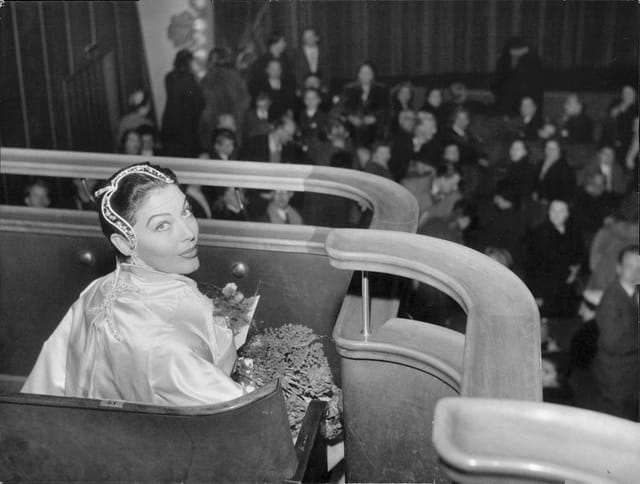
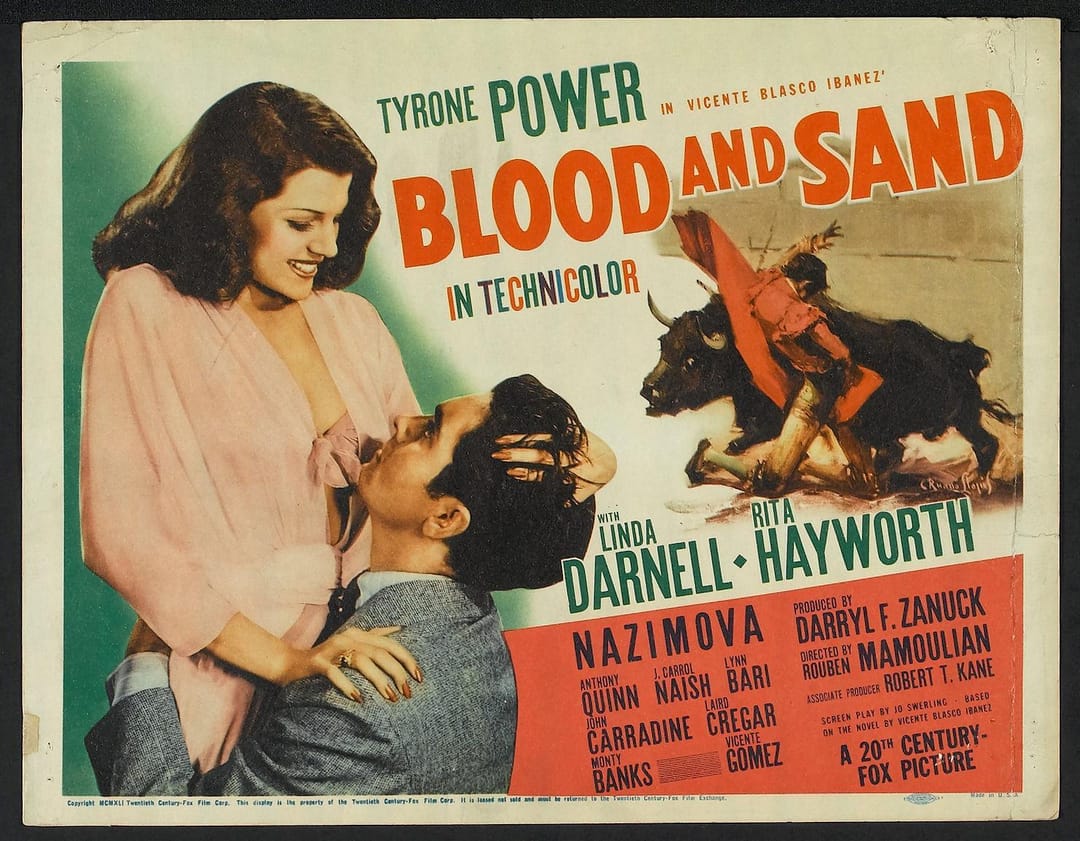
The seductive flamenco routine seems to have been reserved for actresses described by fan magazines as "love goddesses" or "sex kittens" — Rita Hayworth, Sophia Loren, Ava Gardner, and Brigitte Bardot. The dance was sensual, the costumes spectacular, and the subtext rarely subtle. These were love scenes disguised as cultural appreciation.
"A formula that helped to save a nation on the brink of collapse and encouraged a rebellious movie goddess to embrace her true self.
Tossa de Mar — Where Ava Fell in Love with Spain
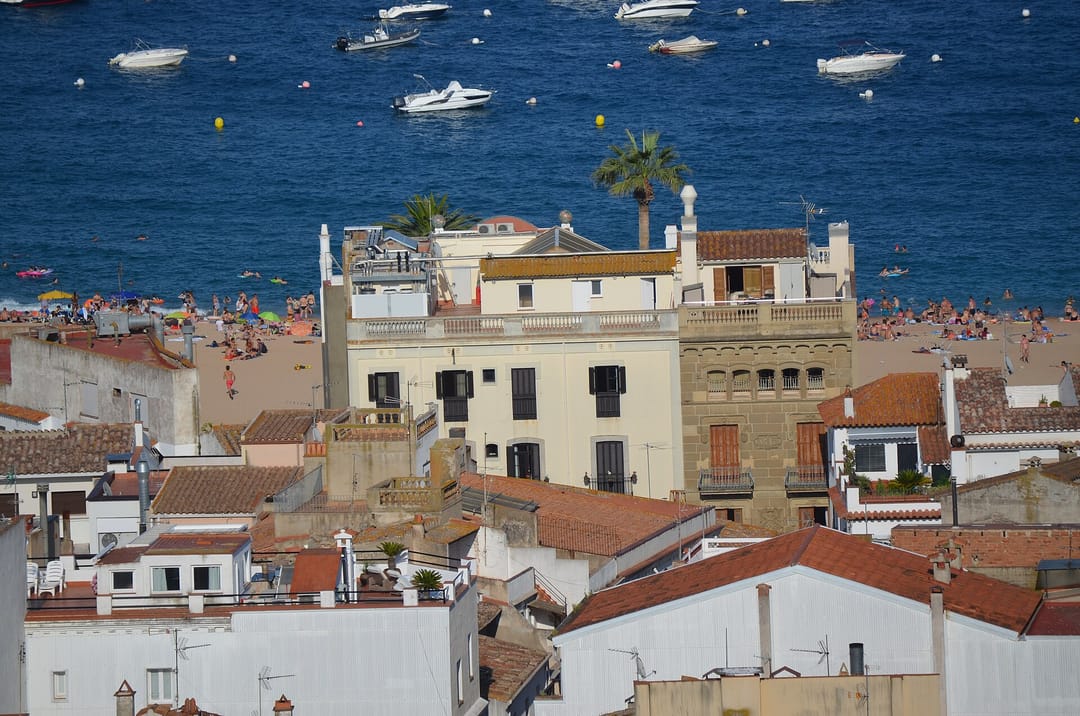
Tossa de Mar, on the Costa Brava, is where Ava Gardner fell in love with Spain. She stayed here in 1950 while filming the hauntingly romantic Pandora and the Flying Dutchman, with James Mason as her ghostly lover — the first of her many films set in the country, and a film that contributed to her lifelong love of it. The movie features an authentic flamenco by native dancers, with Gardner looking on, mesmerised, cigarette in hand. You get the feeling she was taking notes.
Frank Sinatra flew in to visit her on set, and the two stayed together at the Hotel Diana on the Plaza de España during one of the more tempestuous chapters of their relationship. Built by a disciple of Gaudí over a century ago, the Diana sits directly on the beach, with sea-view rooms, balconies, and direct beach access. Its beachfront restaurant has sea views that haven't changed since Gardner and Mason were filming below. It is the kind of place where you half expect Ava to walk through the door in a white sundress and ruin everyone's afternoon. Rooms from around €100 per night in season.
"The epic house used in the film is not available to visit, but there is plenty to see and do that is Ava-related in this delightful little town.
The Gypsy of Madrid
In 1955, Ava Gardner packed her bags, left Hollywood, and moved to Madrid. Her reasons were multiple and overlapping: Spain offered tax advantages for American expatriates, freedom from the paparazzi that stalked her in Los Angeles, and a culture that matched her temperament far better than Bel Air cocktail parties ever could. There was also the small matter of Luis Miguel Dominguín, Spain's most famous and dashing bullfighter, with whom she had begun a passionate affair.
The Franco regime tolerated Ava because she was excellent publicity for Spain. Here was one of the most famous women in the world choosing to live in Madrid, validating the "Spain is different" campaign more effectively than any poster or press trip could. She was the Carmen character made flesh, living exactly the life the tourism machine wanted foreigners to believe was possible. The only problem was that Ava, unlike a fictional character, could not be controlled.
The end came, according to the most popular version of the story, after Ava insulted a priest who had come to her flat to complain about the noise; a fine of one million dollars was reportedly demanded. Whether the amount was real or exaggerated, Ava took the hint. She left Madrid in 1968 and moved to London, where she lived quietly for the rest of her life. She never stopped missing Spain. "Those days are over, baby," she told an interviewer in 1988, two years before her death.
""I really love Spain — the pace of the place, the climate. I thought I could put down roots there, at least for a year or two." — Ava Gardner
Ava's Madrid — Bars, Tablaos & Hotels
The still-stylish Chicote Cocktail Bar on the Gran Vía was one of Gardner's favourite drinking places in Madrid, and she brought Sinatra here several times. The bar earned a place in Ernest Hemingway's short story The Denunciation, and it remains one of the best cocktail bars in the city, barely changed since the 1930s. If you hadn't lit a cigarette for Ava Gardner at the Museo Chicote bar, the saying went, you were nobody. Cocktails from around €12.
The Corral de la Moreria, which opened in 1956, was where Ava indulged her passion for flamenco — and where rumour has it she once slapped Sinatra, which either adds to or detracts from the romantic atmosphere depending on your disposition. Gary Cooper, Rita Hayworth, Picasso and Dalí were also regulars. It now holds a Michelin star for its restaurant and was named by the New York Times as one of the 1,000 places to see before you die. Shows from around €45 including a drink. She also danced at the Villa Rosa, now the Tablao Flamenco 1911, one of the oldest tablaos in the world, where some say she would go up on stage and dance herself.
Horcher, on Calle Alfonso XII opposite the Retiro Park, was Ava's favourite restaurant in Madrid — until the management banned her, a frequent occurrence in her later years as her partying got out of control. Founded in 1943, it is still open, supremely elegant, and one of the last survivors of old-world fine dining in the city. For sleeping, the InterContinental Madrid (formerly the Castellana Hilton) is where Ava stayed with Sinatra and where they barely left the room; Salvador Dalí visited her here once for afternoon tea, which he "flounced out of because he was offended by the word cucumber." The Mandarin Oriental Ritz, meanwhile, is the hotel where Ava was famously barred — perhaps the only hotel in the world whose most famous anecdote involves public urination by a movie star.
"El Retiro Park, opposite Horcher, is where Ava spent time with gypsy performers who let her indulge her passion for flamenco. It is said that on one raucous night in the early 1960s she ran across the park in her underwear. This is not an activity we recommend recreating.
Seville, Malaga & Mallorca

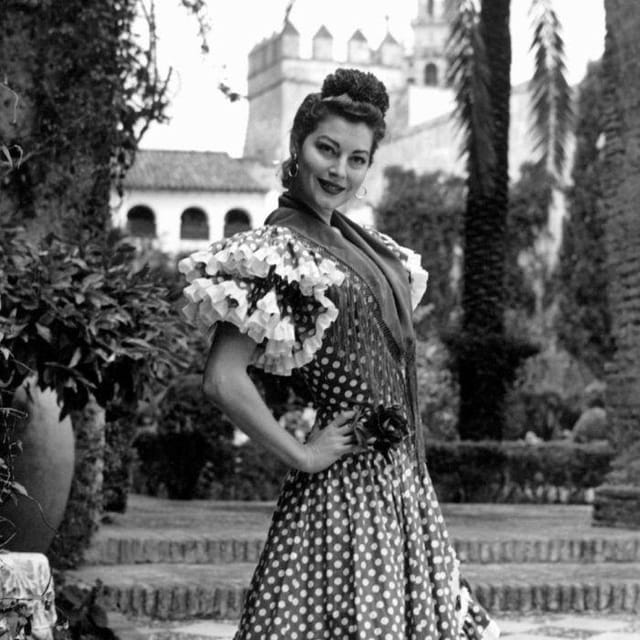
Ava made regular road trips from Madrid all over Spain. In Seville she would often stay at the magnificent Hotel Alfonso XIII, and it was in the hotel lobby during the 1952 Feria that she first met Luis Miguel Dominguín — who was travelling with his girlfriend at the time. That did not deter Ava. She was photographed fully embracing the gypsy and flamenco look at bullfights at the Plaza de Toros de la Real Maestranza, one of the oldest and most beautiful bullrings in Spain (guided tours from around €10; bullfight season runs March to October).
In Málaga she stayed at the Grand Hotel Miramar, a stunning Belle Époque palace overlooking the sea. And in later years she befriended the great British poet and novelist Robert Graves, often visiting him and his family at their villa in Deià, Mallorca, now a museum, La Casa de Robert Graves (open to visitors, entry around €7). Ava was spotted on several occasions watching and joining in flamenco performances in the island's capital, Palma.
Frank Sinatra in Spain
Sinatra's own Spanish chapter began in April 1956, when outdoor shooting started for his film The Pride and the Passion — co-starring Cary Grant — at El Hoyo de Pinares outside Madrid. Sinatra took up residence at the Castellana Hilton, now the InterContinental Madrid on the Paseo de la Castellana, and stayed there several times with Ava Gardner too, before she moved to the city.
He also came to Tossa de Mar to visit Ava on the set of Pandora and the Flying Dutchman, where the couple stayed together at the Hotel Diana by the beach. Between the cocktails at Chicote and the flamenco at the Corral de la Moreria, Spain played host to some of the most turbulent and romantic episodes of the Sinatra–Gardner story.
Flamenco Lives On
The flamenco clubs are still thriving. The Corral de la Moreria, the tablao that hosted Ava Gardner and Picasso in the 1950s, is not only still open but has a Michelin-starred restaurant attached. You will not find Ava propping up the bar, but you might find a classic film fan clutching a well-thumbed copy of The Barefoot Contessa, trying to channel her spirit.
The "Spain is different" slogan was retired long ago, but the imagery it traded on — flamenco, passion, bulls, and beautiful women who cannot be tamed — still lurks in the background of how much of the world imagines Spain. The films on this website, shot in Technicolor on the Costa Brava and the streets of mid-century Madrid, present a version of Europe so impossibly glamorous that it makes modern travel brochures look like spreadsheets.
"And somewhere, in a Madrid tablao with Arabic corbels and 19th-century streetlamps, a dancer is stomping her feet, clapping her hands, and making a roomful of strangers imagine what she might be like off her feet.