Photo: Hero: "Hearst Castle Casa Grande" by Markus Laber (Wikimedia user Impulse), CC BY-SA 3.0 / GFDL, via Wikimedia Commons
 The Classic Hollywood History of Hearst Castle: Celebrity Stories, Scandals, and How to Visit
Once the most coveted ticket in Tinseltown, an invite to William Randolph Hearst's grand Spanish finca in San Simeon was a clear sign that you had made it in 1930s Hollywood.
"Far above me I beheld in the glow of the sunset... the castle. I had heard many descriptions of it, some flattering, some derisory, but I, personally, found it breathtaking. It looked from the coast like a green oasis enclosing a white Spanish village, dominated by twin cathedral towers." — David Niven
Once the most coveted ticket in Tinseltown, an invite to William Randolph Hearst's grand Spanish finca in San Simeon was a clear sign that you had made it in 1930s Hollywood.
Media mogul Hearst collected people like he did fine art: carefully curating his dinner party guest list, with the help of his lover and glamorous hostess Marion Davies, cultivating an eclectic mix of high society, entertainers, politicians, intellectuals, and comedians. With such a ravishing crowd, occasional drunken mischief and sexy shenanigans were inevitable.
When I visited Hearst Castle a few years ago, our tour guides were not very forthcoming on the salacious celebrity gossip front, instead choosing to concentrate on how the building came to be built and the fine art and antiquities on show within it. This was all fascinating, but I couldn't help wondering, as I stared up at the ornate ceilings and priceless tapestries: who was doing what to whom amongst all this finery?
"Mosaics in gold and blue adorn the walls of the indoor Roman pool at Hearst Castle
Origins of a dream
Hearst's father George was a silver mine owner who struck it lucky when he discovered enormous quantities of silver in Virginia in the early 1850s. George headed west and bought large chunks of California with the windfall, including 40,000 acres near San Simeon, where he built a modest house.
It was at the Hearsts' little hacienda in the hills that the adolescent William Randolph enjoyed carefree summers in the wilderness. As Hearst Jr. built his media empire years later, he bought up even more land in San Simeon to build his dream house. Set on a craggy hilltop with 360-degree panoramic views of the Pacific Ocean, his incredible monument became known as Hearst Castle.
Hearst formally named his kingdom "La Cuesta Encantada," meaning "The Enchanted Hill." It was an enchantment that would draw Hollywood's biggest stars for three decades.
"The main house was known as the Casa Grande
Julia Morgan: the woman who built the castle
In 1919, Hearst hired San Francisco architect Julia Morgan, the first woman to be granted an architect's licence in California, to build his home. Their close collaboration lasted from 1919 to 1947, nearly three decades of continuous construction, modification, and embellishment.
Morgan designed the Mediterranean Revival estate and filled it with art and antiques from Hearst's vast collection. Alongside the house and guest bungalows, Morgan was entrusted with designing a zoo and game reserve, home to lions, tigers, chimpanzees, zebras, camels, and kangaroos. The zebras, as we shall see, would have the last laugh.
Rules of the house
The three cardinal rules of a Hearst party, set by Hearst himself:
No drunkenness
No bad language or off-colour jokes
No sexual relations between unmarried couples
"Life in this Hearstian empire," wrote the socialite Gloria Vanderbilt, "is lived according to the disciplinary measures laid down by its dictator." That these rules were set by a man who was openly living with his lover while his wife remained in New York tells you everything you need to know about the relationship between Hollywood and hypocrisy.
A day at the castle: the guest itinerary
Guests would be greeted at San Luis Obispo station and chauffeur-driven to the castle, winding up the hill through Hearst's private zoo, where lions, elephants, and zebras grazed on either side of the road. The effect, by all accounts, was something between Jurassic Park and a fever dream.
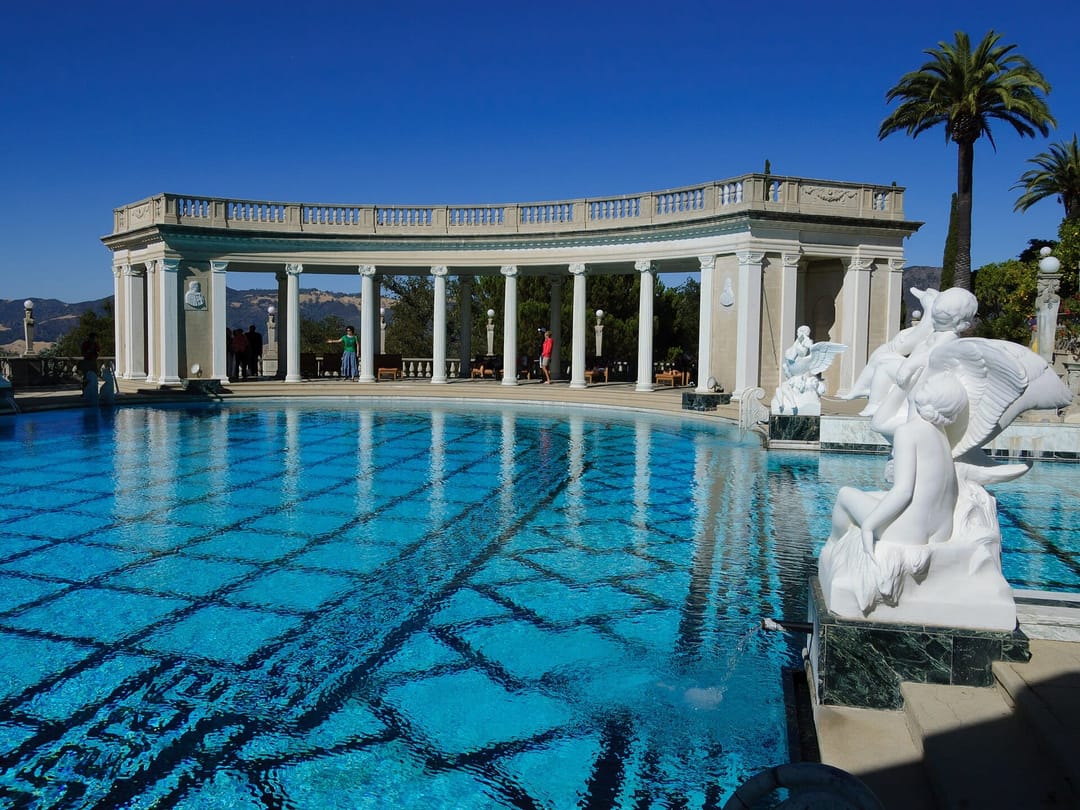
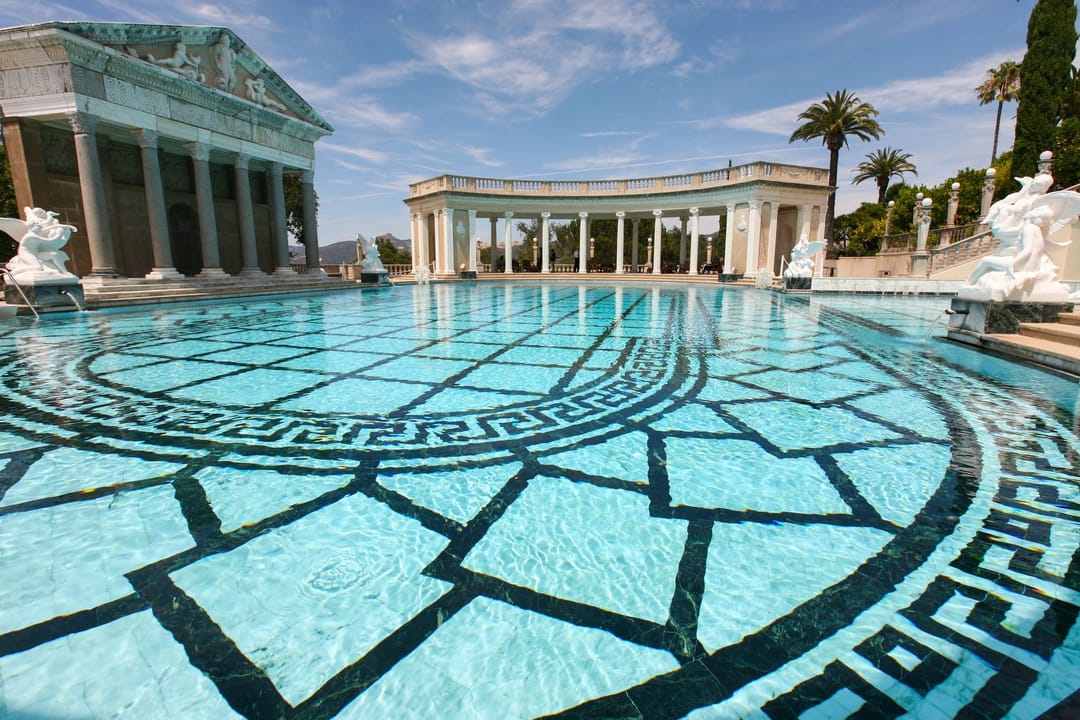
During the day, guests were encouraged to enjoy the many delights the estate had to offer: horse riding, tennis (tournaments were regularly hosted by Fred Perry), and swimming in the Neptune or Roman pools.
Rainy days revolved around competitive games of The Landlord's Game and later Monopoly (imagine playing Monopoly with William Randolph Hearst, a man who owned most of the board in real life) and solving jigsaw puzzles.
Daily animal feeding sessions attracted guests eager to watch the lions, monkeys, and elephants eat their lunch. Some afternoons, Marion Davies would invite female guests up to her room to try on her evening gowns, encouraging them to wear them to dinner for fun. The dress code was never formal, unless there was some special event or party.
At precisely 7:30pm, guests would meet for drinks in the Assembly Room. According to Cary Grant: "You'd get one weak martini, or two if you were quick!" Confirming that Hearst meant what he said about not wanting his guests inebriated.
Then it was onto the dining room at 9pm for dinner, where unpretentious food was served alongside American condiments (ketchup bottles sat next to some of the world's finest wines, a juxtaposition that reportedly horrified European guests) and world-class vintages.
After dinner, guests would retire to the Billiard Room, before Hearst screened a movie in his private cinema. Guests report an unusual number of Marion Davies movie screenings. Hearst had the films heavily edited to omit any racy scenes, which would leave him red-faced in front of company.
"Cary Grant and Charlie Chaplin once played tennis here
Gossipy titbits: classic Hollywood stars at Hearst Castle
While shenanigans at the castle remained chaste when Hearst was present, the out-of-sight, out-of-mind mentality would quickly take over once he retired to bed. Cary Grant and David Niven told stories about creeping up and down the halls late at night to see who was still awake and up for continuing the party.
Grant, a regular visitor to the Enchanted Hill (he loved the tennis courts), allegedly once flour-bombed the castle from an aeroplane for a giggle. When the charismatic actor returned to the castle, his bags were packed and he was asked to leave. This is the only recorded instance of Cary Grant being asked to leave anywhere.
One winter evening, Harpo Marx thought it would be funny to dress the outdoor statues in mink coats that he stole from the Hearst vault. The problem was that it rained that night. Neither Mr Hearst nor Miss Davies were very amused by the ruination of their furs at the hands of the mute Marx brother.
Screen heartthrob and all-American male Clark Gable was reluctantly roped into partaking in tediously long trail rides around the estate with Hearst at his side, according to his friend David Niven. Gable was too polite to refuse and too famous to escape.
Actor Ralph Bellamy said of his first night at the castle: "My wife and I woke up at 3am, thinking we could hear lions and tigers. Don't be crazy, I thought, unaware that Hearst had an entire zoo downstairs. When we got up the next morning, we were shocked to see a couple of lions in cages below our room, who had just arrived ready to be added to Hearst's coterie."
While dinner parties at the castle were always a casual affair, the Hearst family also loved to entertain on a grand scale, and what better way to do that than a costume party? During these grand occasions, the Hearsts brought in make-up artists and seamstresses direct from Hollywood to ensure costumes were authentic.
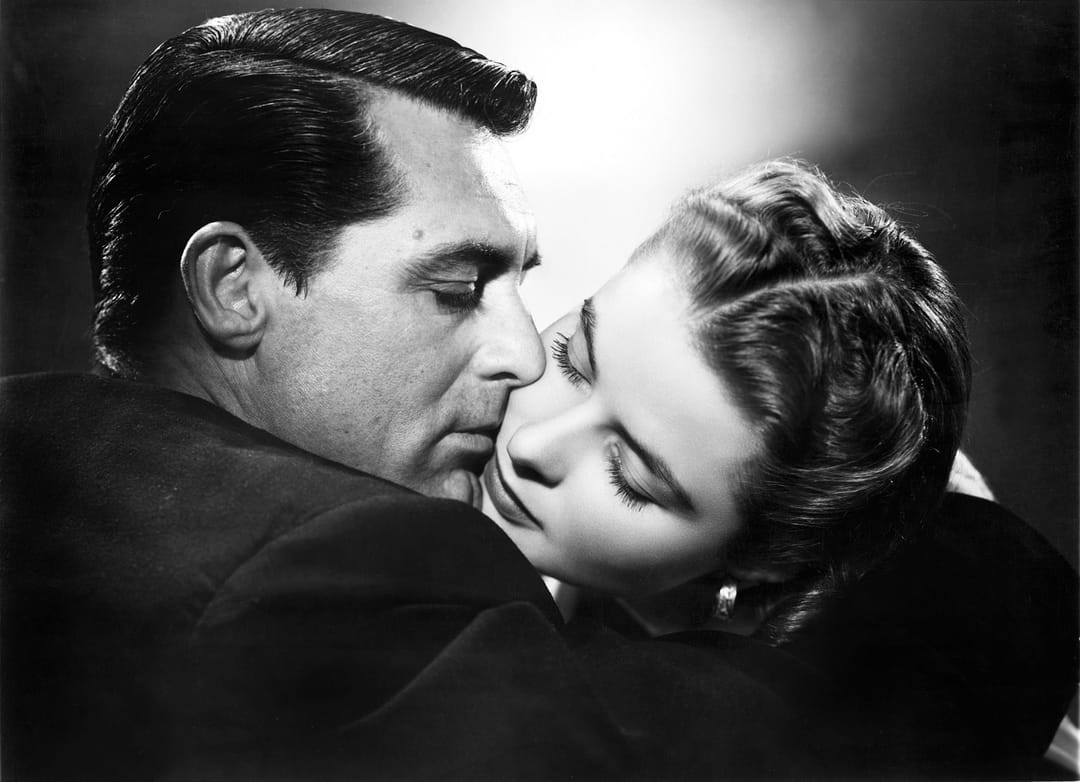
"Cary Grant in 1939
Marion Davies: the hostess with the mostest
Marion Davies deserves more than a footnote in this story. She was actually a gifted comedic actress, but Hearst, who funded her films, kept insisting on casting her in serious dramatic roles, which was a magnificent misuse of her talents. Orson Welles later said that Davies was "one of the most talented comediennes in the history of the screen" and that Hearst's obsession with making her a dramatic star was "the great tragedy" of her career.
It was common knowledge that Davies had a drinking problem and would ask guests to hide drinks in the bathroom for her, to conceal the amount she was drinking from Hearst. One night at dinner, she dropped her purse and a bottle of gin fell out and smashed on the floor. "My new perfume," she nervously joked.
She also ran a beachside residence in Santa Monica that was, at the time, the largest private beachfront property in Los Angeles. It is now the Annenberg Community Beach House, a public facility on Pacific Coast Highway, and is well worth a visit. Free entry to the beach; pool access from $10.
The pool parties
On that subject, David Niven was delighted to discover that the great Charlie Chaplin would be joining them for dinner one evening. After the novelty of dining with the Little Tramp wore off, Niven memorably wrote in his memoirs of his astonishment at the dullness of the great man's stories. In the end, Niv couldn't wait to get to bed.
Wise-cracking satirist and writer Dorothy Parker was said to have received her marching orders after being caught cavorting with an unnamed male at the castle. Proving that Hearst enforced his rules rigidly, even when the offender was one of the wittiest women in America.
The Neptune Pool and Roman Pool were popular recreation spots for guests at "the ranch." Douglas Fairbanks Jr. played water polo in the Neptune Pool. Johnny Weissmuller, Olympic gold medal-winning swimmer and star of Tarzan, also swam in it.
Esther Williams reported in her autobiography that the Fabius Pool set from her movie Jupiter's Darling, designed by art director Cedric Gibbons, was based on the Neptune Pool at San Simeon.
"Charlie Chaplin's anecdotes were dull, according to Hollywood raconteur David Niven
Citizen Kane: the film Hearst tried to destroy
No article about Hearst Castle would be complete without mentioning the film that Hearst spent millions trying to suppress. In 1941, Orson Welles released Citizen Kane, widely regarded as one of the greatest films ever made, whose protagonist, Charles Foster Kane, was transparently based on Hearst. The parallels were unmistakable: the media empire, the palatial estate (Kane's "Xanadu" was clearly modelled on San Simeon), and the complicated relationship with a talentless singer whom Kane tries to make into a star (a pointed reference to Hearst's promotion of Davies, though Welles always maintained Davies had real talent).
Hearst used every weapon in his considerable arsenal to prevent the film from being released, including threatening to expose the private lives of other studio executives. The film was released anyway, flopped at the box office (partly due to Hearst's campaign against it), and was only recognised as a masterpiece decades later. If you haven't seen it, watch it before you visit the castle. The echoes are everywhere.
A sad end
While Hearst hosted British Prime Minister Winston Churchill and his brother, son, and nephew, Churchill reported that Mrs Hearst entertained them on the Friday evening at the castle. They were then chaperoned to Santa Monica in the morning to be hosted by Marion Davies at her beachside residence on the Saturday night. Even Churchill couldn't paper over the awkwardness of that arrangement.
Actress and socialite Patricia Van Cleeve was a regular visitor at the castle and was always introduced as Marion Davies' favourite niece. But rumour has it she was actually Hearst and Davies' biological daughter, something she alluded to before she died in 1993. Adding fuel to the fire, Van Cleeve is one of the only people to have married at the castle, tying the knot with author Arthur Lake in 1937.
When Hearst died in 1951, he left Marion the San Simeon estate and she promptly sold it back to the Hearst Corporation for a measly $1. "It wasn't about the money," she said.
On the last night before the castle was gifted to the State of California as a public monument, David Niven was invited to a sombre New Year's Eve get-together organised by Bill Hearst Jr. It was supposed to be a celebration, but the group were haunted by the ghosts of what the castle once was. They called it a night before the clock had even struck midnight.
The zebras
One final, glorious detail. When Hearst's private zoo was disbanded in 1937, most of the exotic animals were sent to public zoos. The zebras, however, were allowed to roam free. Their descendants, more than 100 of them, still graze on the 82,000-acre Hearst Ranch to this day. You can often spot them from Highway 1 as you drive up to the castle, grazing alongside Angus beef cattle, looking thoroughly unbothered by the traffic. They are, in their own quiet way, the last surviving guests of the Enchanted Hill.
Plan your visit
Hearst Castle is located on Highway 1 near the town of San Simeon, roughly halfway between San Francisco and Los Angeles. The drive along Highway 1, particularly the stretch from Cambria through Big Sur, is one of the most spectacular coastal drives in the world and is worth the trip in its own right.
All visits to Hearst Castle are by guided tour only. Tours depart from the Visitor Centre at the base of the hill, where a shuttle bus takes you up to the castle. Book in advance, especially in summer, as tours sell out. Reservations can be made up to 60 days in advance at ReserveCalifornia.com or by calling 1-800-444-4445.
Available tours include the Grand Rooms Tour (the recommended tour for first-time visitors, covering the main social rooms of Casa Grande, fewest stairs, 75 minutes, $35 adults / $20 children); the Upstairs Suites Tour (the upper floors and guest bedrooms, see where the stars actually slept, $35 adults / $20 children); the Hearst and Hollywood Tour (focuses specifically on the castle's celebrity connections, the one for readers of this website, $35 adults / $20 children); the Cottages and Kitchen Tour (includes Hearst's beloved Casa del Mar and the industrial-sized kitchen that fed Hollywood's finest, $35 adults / $20 children); the Julia Morgan Tour (an in-depth look at the life and career of the castle's architect, including rarely seen areas, $35 adults / $20 children); and the Art of San Simeon Tour (an exclusive small-group tour with access to usually restricted rooms containing Hearst's art collection, seasonal and not available in summer, 2 hours, $100 per person).
The Hearst Castle Foundation also occasionally organises fundraising pool events allowing guests to swim in the Neptune or Roman Pools. These are rare, sell out instantly, and cost around $950 per person. Keep an eye on the Hearst Castle website for announcements.
Nearby
The Hearst Ranch Winery tasting room is located directly across Highway 1 from the castle Visitor Centre. The ranch also sells its own grass-fed beef.
The elephant seal rookery at Piedras Blancas, just up the road from the castle, is home to thousands of northern elephant seals from December to March and is free to visit.
The Annenberg Community Beach House in Santa Monica, the former Marion Davies beachfront mansion, is open to the public. Free beach entry; pool access from $10.
The nearby towns of Cambria and San Simeon offer accommodation and dining. Cambria is the more charming option, with a pretty main street and good restaurants.
Practical information: Wear comfortable shoes (there's a lot of walking and stair-climbing). Bring layers, as the hilltop can be cool even when the coast is warm. The only food available for purchase is at the Visitor Centre, so eat before or after your tour. Tours are in English only.
""A visit to the Hearst ranch was a ticket to Never Land. Never has there been such a place, and never will there be again." — Hedda Hopper