Becoming Carmen: Hollywood, Flamenco, and the Birth of Tourism in Spain
How a fictional gypsy invented by a Frenchman in 1845 helped save a dictatorship, made Hollywood's love goddesses, and turned Spain into the world's favourite holiday destination.

This is the story of how a fictional gypsy woman invented by a Frenchman in 1845 helped save a bankrupt fascist dictatorship, launched the careers of Hollywood's most dangerous women, and turned Spain into the world's favourite holiday destination. It involves opera, propaganda, Technicolor, tax exile, and at least one million-dollar fine for insulting a priest. It begins, as these things tend to, with a dance.
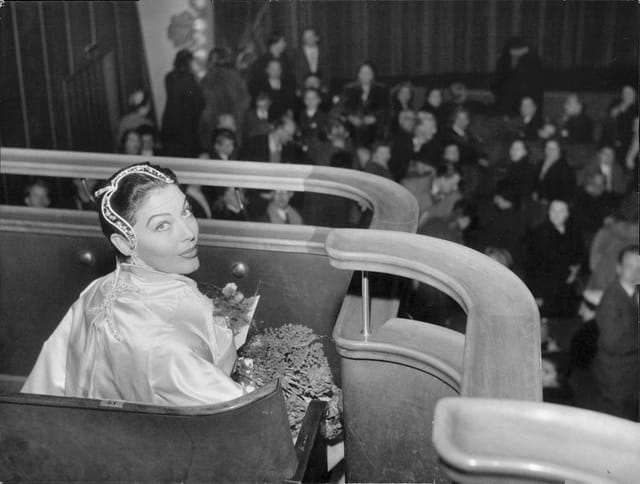
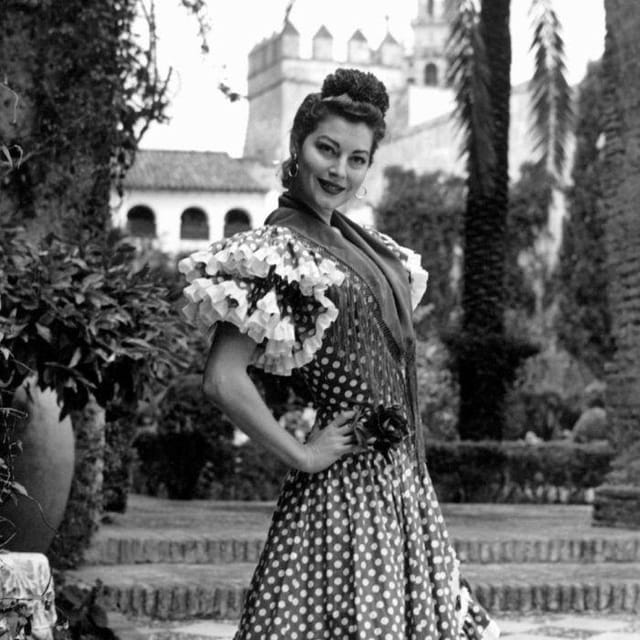
Ava Gardner, principal love goddess of 1950s cinema, was bewitched by the flamenco, a fiery dance attributed to the Roma gypsies of Southern Spain. "I really love Spain," she said, "the pace of the place, the climate. I thought I could put down roots there, at least for a year or two."
"Spain, I miss of course, and dancing to flamenco music late at night. Those days are over, baby. — Ava Gardner, 1988

Spanish flamenco fever peaked in Hollywood in the late 1950s as a result of a campaign by the fascist Franco regime to bring tourists to Spain. The government's strategy included making the country a mecca for British and American filmmakers, and their plan was paying off. Movies like El Cid, Around the World in 80 Days, and The Pride and the Passion were in cinemas around the world, showcasing the rich heritage and dazzling landscapes of Spain.
In the pages of Photoplay, fans devoured salacious gossip about Ava Gardner's scandalous affairs with handsome Spanish bullfighters, and imagined her dancing the flamenco with local gypsies until dawn. The beautiful actress became so deeply attached to Spain that she moved there mid-decade to live a bohemian lifestyle that rivalled Carmen herself.

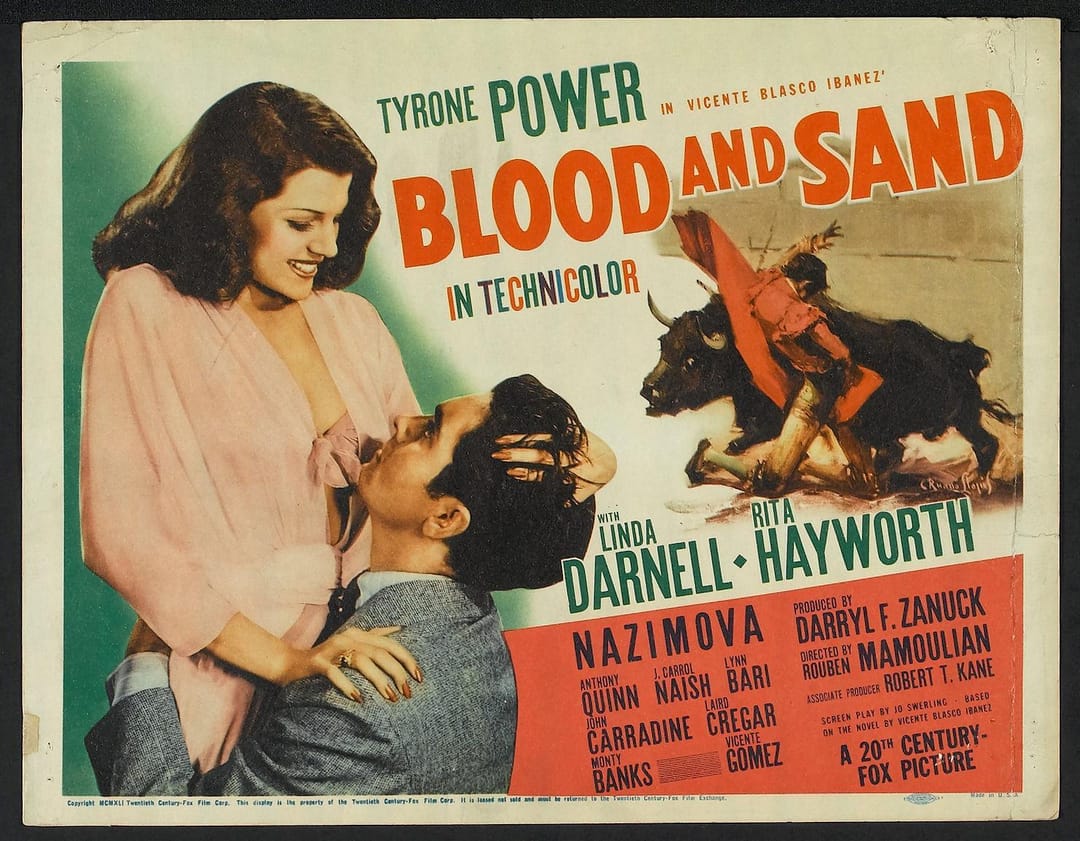
Ava strongly identified with the female gypsy character that permeated Western literature and film of the 19th and early 20th century. She was the sizzling, often tragic beauty that cannot be tamed. Sound familiar? Classic film examples include Ava as Maria Vargas in The Barefoot Contessa, or Rita Hayworth as Dona Sol in Blood and Sand.
This persistent female archetype, most memorably defined by Georges Bizet's operatic masterpiece Carmen (1875), and regurgitated in countless guises ever since, captured imaginations for more than a century. Ava said of her character in the film, in which she starred opposite Humphrey Bogart: "I understood Maria Vargas, the Contessa of the title. She was a lot like me."
Behind the facade of the star machine's carefully coiffed odes to Hispanic culture in the 1950s, there was a successful formula that spoke to travellers and movie fans who flocked to experience Spain as they saw it on the big screen. A formula that helped to save a nation on the brink of collapse and encouraged a rebellious movie goddess to embrace her true self.
"Carmen will always be free"

The flamenco is an art form derived from the folklore and musical traditions of Andalusia, Spain, officially documented for the first time in the towns of Cadiz, Jerez, and Seville at the end of the 18th century. Its roots go back many centuries.
A gravelly voiced singer and the sounds of spine-tingling Spanish guitar compel the female dancer to move her body with passion and abandon, clapping her hands and stomping her feet. Voyeurs in the audience watch the sweat drip from her brow, as they imagine what she might be like off her feet.
Flamenco gained in popularity at a time when the great powers of Europe were busy carving up the world in a fierce empire-building frenzy. Young men of noble families were following in the footsteps of Lord Byron and "grand touring" their way across Europe and the Middle East. Spain was a far-flung destination in those days; a limited travel network made travelling the country a challenge for foreigners, and stories of sparse lodgings and endless banditry meant the Riviera crowd stayed away.

One of the most enduring caricatures to appear in literature during this period was the fiery and superstitious gypsy, a beautiful and mysterious woman who danced a seductive flamenco. 19th-century novelist Prosper Merimee romanticised and objectified his female gypsy protagonist, Carmen, so successfully that she became a standard "type" in the literary lexicon. The fact that she bore about as much resemblance to actual Roma women as James Bond does to actual civil servants was beside the point.
Georges Bizet's wildly successful opera, based on Merimee's novella, continued to captivate audiences from London to New York at the turn of the century. Carmen is one of cinema's most frequently adapted stories, filmed no fewer than fourteen times between 1915 and 1954. Charlie Chaplin even made a parody that spoofed DeMille's version, called A Burlesque on Carmen. Spain's national character was becoming entwined with Carmen's.
The Black Legend
By 1898, the once mighty Spanish Empire was falling apart. Cuba and the Philippines were lost after defeat in the Spanish-American War. In the wake of this devastating loss, Spanish nobles were keen to distance themselves from the image painted by non-Spanish, Protestant writers and historians, who described an empire in tatters, overrun by bandits, and wallowing in past glories. This persistent Spaniard-bashing in popular literature was given a name by Spanish historian Julian Juderias: Leyenda Negra, or "Black Legend."
Anti-Hispanic attitudes were common in Northern European writing. That great champion of reason and morality, 18th-century philosopher Immanuel Kant, wrote rather bitchily: "the Spaniard's bad side is that he does not learn from foreigners; that he does not travel in order to get acquainted with other nations; that he is centuries behind in the sciences." Which is rich coming from a man who never left Konigsberg.
The Carmen stereotype, with her loose morals and brazen sexual appetite, played a significant role in tarnishing the reputation of Spain in the minds of the Victorian European landed gentry. The dance was labelled vulgar and pornographic and openly lambasted by the Catholic Church. Spain wanted to be taken seriously again. Carmen was not helping.
Capturing flamenco on film

As the Spanish were busy disowning flamenco, the rest of the world could not get enough of it. Flamenco was captured on film for the first time by Thomas Edison, when he recorded the famous Spanish dancer Carmencita with his Vitascope projector in 1894.
Carmencita and her beguiling contemporary, La Argentinita, toured theatres all over America and Europe, cashing in on audiences' growing fascination with Romany culture. In 1915, Cecil B. DeMille and Raoul Walsh began shooting rival adaptations of Carmen for the big screen. Geraldine Farrar was DeMille's muse, while Walsh opted for Hollywood's first sex goddess, Theda Bara.
While experimenting with Technicolor, Pioneer Pictures used the Carmen story to flesh out their short film, La Cucaracha, which went on to win an Academy Award in 1934. Flamenco performances formed part of the bill in 1930s cabaret clubs from Paris to New York. Carmen Amaya, one of flamenco's most extraordinary personalities, gave sold-out performances in New York that led one critic to write: "this human Vesuvius smouldered, flamed and exploded her way through the most exciting evening of dance that this city has seen."
"Spain is different"
The popularity of flamenco and the Spanish mystique peaked in the 1950s, just as the Spanish tourism industry began to take flight. Prior to that time, Spain's popularity as a tourist destination was dwarfed by its French, Swiss, and Italian neighbours.
But then came the Spanish-American War (1898), WWI (1914-18), the Spanish Civil War (1936-39), and WWII (1939-45) in relatively quick succession, contributing to the total obliteration of Spain's wealth and power. By the end of the 1940s, Spain was in trouble and money was in short supply.
Among the rubble of a crumbling empire and an emerging dictatorship, the burgeoning global tourist industry became a beacon of hope for the faltering Franco regime. Not only could tourism bring much-needed wealth to the country, but General Franco saw it as a way of gaining acceptance from a global community that disapproved of his violent ascent to power.
So the government set out on a conscious campaign to promote Spain as a leading tourist destination. They sought lucrative partnerships with TWA and Hilton Hotels, continually hosted travel writers and journalists, and funded global marketing campaigns. "Spain is different" became their slogan in the 1950s, and the administration began to embrace Spain's black legends, including that of Carmen, to help sell holidays. It was arguably the most successful national rebranding exercise of the 20th century, and it was built on a fictional gypsy woman invented by a Frenchman.
An unlikely Hollywood patron

Beleaguered by television and the slow decline of the studio system in the 1950s, Hollywood studios relied on shaving production costs by working outside the US. Spain was an attractive option, and Franco welcomed Hollywood with open arms.
A particularly fruitful relationship between the regime and producer Samuel Bronston produced classics such as El Cid, 55 Days at Peking, and King of Kings. Franco insisted that the government exercise editorial oversight of foreign filmmaking enterprises operating in Spain, and for the most part, foreign filmmakers abided by this rule. As a result, the dramatic landscapes and colourful culture of Spain were showcased vividly on screen in the 1950s and 60s.

Romantic melodramas like Pandora and the Flying Dutchman, The Barefoot Contessa, and The Pride and the Passion were filmed on location in Spain and exploited the familiar tropes of Carmen, infusing their stories with passion and desire while staying within the limits of the Motion Picture Production Code. The Hays Code limited filmmakers' ability to explore taboo subjects like sex and violence, so producers improvised by borrowing from other cultures, claiming they were faithfully portraying the customs and traditions of that place. Spain, Mexico, and Italy were familiar backdrops for telling these types of stories. It was cultural outsourcing of the most convenient kind.
A certain type of woman

Borrowing from other cultures also bled over into the star-making process. The Carmen character helped to define the brand and elevate the careers of some of cinema's most beautiful women by allowing them to be openly sexual on screen.
The seductive flamenco routine seems to have been reserved for actresses described by fan magazines as "love goddesses" or "sex kittens": Rita Hayworth, Sophia Loren, Ava Gardner, and Brigitte Bardot. Their larger-than-life public personas required them to play characters much larger than the moral limitations put on the all-American feminine ideal of the time.
These actresses had more in common than just their beauty; they also all had tumultuous private lives, involving passionate love affairs with movie stars, princes, and bullfighters. In casting them in these dancing Latina roles, the studios played with their "bad girl" reputations, adding fuel to the fantasy that these women could not be tamed on screen or off.
Rita as Carmen

Take Rita Hayworth as Carmen in 1948's The Loves of Carmen. She was at the height of her career, having played the career-defining role of nightclub singer Gilda only two years before. Her fans knew her as "the Love Goddess," and her colourful love life was rarely absent from the gossip magazines.
Fans flocked to watch Rita play the promiscuous Carmen opposite on-screen beau Glenn Ford, because this was who they thought she was. Hayworth is perhaps the most convincing dancer of all the Hollywood actresses who danced flamenco on screen, probably because she belonged to a famous family of Romany dancers from Seville. At the age of 14, she was forced to dance with her father in a cabaret act called "the Dancing Cansinos."
Which is ironic, because her true personality could not have been further from the dancing Latina stereotype. Hayworth was shy and insecure, probably as a result of suffering abuse at the hands of the man who was supposed to protect her: her own father and self-appointed dancing partner. It did not really matter if the Carmen label did not match the real person. Hollywood rarely let the truth get in the way of a profitable archetype.
Life imitates art
Arguably no one took on the romantic gypsy persona in real life with more passion, authenticity, or gusto than Ava Gardner.
The stunning actress from North Carolina was cast as ravishing Spaniard Maria Vargas in 1954's The Barefoot Contessa, a star vehicle designed to cement Gardner's reputation as "the world's most beautiful animal," the shocking tagline for the film. By this time, she had gained a reputation as a homewrecker and collector of husbands: child star Mickey Rooney, big band leader Artie Shaw, and old blue-eyed lover boy Frank Sinatra.
More than 30 years later, Ava said: "that role fitted me like a goddamn glove. I understood Maria Vargas... I knew that lady inside out." Her flamenco performance in the film seems to mirror her own life at the time: a beautiful woman trapped in a gilded cage, yearning to break free and have fun on her own terms.
By the mid-1950s, Ava's media persona had morphed from husband-stealer to modern playgirl. She started to take on the Carmen persona in her private life and clearly connected very deeply with the music and dance of Romany culture. And then she did what Carmen would do. She left.
The gypsy of Madrid
In 1955, Ava Gardner packed her bags, left Hollywood, and moved to Madrid. Her reasons were multiple and overlapping: Spain offered tax advantages for American expatriates, freedom from the paparazzi that stalked her in Los Angeles, and a culture that matched her temperament far better than Bel Air cocktail parties ever could. There was also the small matter of Luis Miguel Dominguin, Spain's most famous and dashing bullfighter, with whom she had begun a passionate affair.
Their relationship was passionate and combustible, and it ended, as these things tend to, after about a year. Dominguin wanted marriage and children. Ava wanted to dance flamenco until 4am. They were, in the end, incompatible.
But the end of the affair did not mean the end of Ava's love affair with Spain. She settled into a penthouse duplex at 11 Calle Doctor Arce in Madrid, and for the next thirteen years she lived a life that would have made Carmen blush. She drank with Hemingway at the Cerveceria Alemana in the Plaza de Santa Ana. She danced at the Villa Rosa, one of the oldest flamenco tablaos in the world, and at the Corral de la Moreria, which had opened in 1956 and was rapidly becoming the flamenco capital of the world. She attended bullfights at Las Ventas.
The Franco regime tolerated Ava because she was excellent publicity for Spain. She was the Carmen character made flesh, living exactly the life the tourism machine wanted foreigners to believe was possible in Spain. The only problem was that Ava, unlike a fictional character, could not be controlled.
The end came, according to the most popular version of the story, after Ava insulted a priest who had come to her flat to complain about the noise. A fine of one million dollars was reportedly demanded. Whether the amount was real or exaggerated, Ava took the hint. She left Madrid in 1968 and moved to London, where she lived quietly for the rest of her life.
She never stopped missing Spain. "Those days are over, baby," she told an interviewer in 1988, two years before her death. But the image she left behind, of a Hollywood goddess who abandoned the star machine to dance flamenco in Madrid, proved far more durable than any film role. It is, in many ways, the most Carmen story ever told. And it happened to be true.
Is Carmen still dancing?
Franco's tourism gamble paid off spectacularly. Spain went from receiving fewer than half a million tourists in 1950 to more than 80 million annually today, making it one of the most visited countries on earth. The imagery it traded on, flamenco, passion, bulls, and beautiful women who cannot be tamed, still lurks in the background of how much of the world imagines Spain.
The flamenco clubs are still thriving. The Corral de la Moreria, the tablao that hosted Ava Gardner and Picasso in the 1950s, is not only still open but has a Michelin-starred restaurant attached. Bullfighting, the other great pillar of the Carmen mystique, is a different story: attendance has collapsed, Catalonia and the Balearic Islands have already outlawed it, and among under-35s, 83% want it banned entirely.
Merimee wrote Carmen in 1845. Bizet turned her into an opera in 1875. Hollywood turned her into a career strategy in 1948. Franco turned her into a tourism campaign in 1952. And Ava Gardner, the girl from North Carolina who understood Maria Vargas down to the souls of her feet, turned her into a life.
The flamenco clubs are still open. The bulls are still running, just about. The penthouse in Calle Doctor Arce is still there. And somewhere, in a Madrid tablao with Arabic corbels and 19th-century streetlamps, a dancer is stomping her feet, clapping her hands, and making a roomful of strangers imagine what she might be like off her feet. Carmen is still dancing. She is just a little harder to find.